
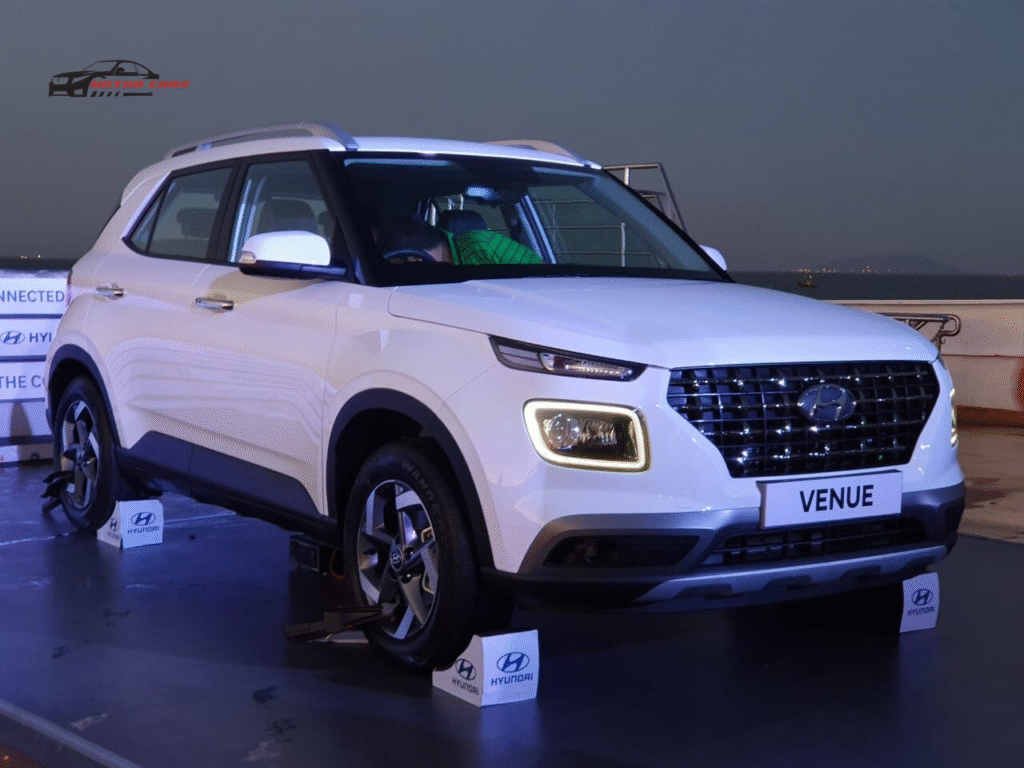

Hyundai is turning heads again. With the upcoming generation of the Venue compact SUV expected to launch in India in November 2025, several reports suggest that it will feature display sizes that outdo its larger sibling, the Creta.
Here’s a breakdown of what’s coming, how it compares with Creta, and what it might mean for you as a buyer.
What We Know So Far
According to recent reports and spy shots:
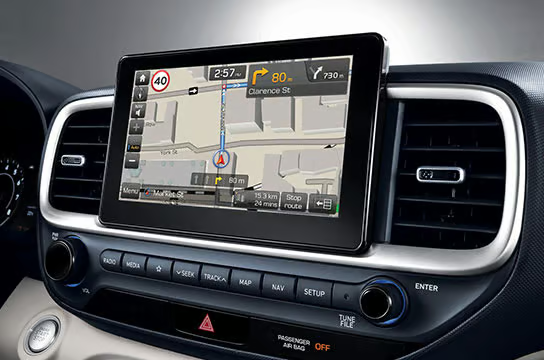
- The new Venue will get a dual-screen setup, consisting of a 12.3-inch infotainment touchscreen + a 12.3-inch digital driver display. Together it’s ~24.6 inches worth of screens.
- These screens are likely to support over-the-air (OTA) updates, meaning future improvements or fixes could be delivered wirelessly.
- Support for Level-2 ADAS (Advanced Driver Assistance Systems) is confirmed. That includes features such as adaptive cruise control, blind-spot collision warning, rear cross-traffic collision avoidance, etc.
- The venue’s interior design is also being pushed upmarket: Creta-like styling, strong build, more premium touches.
How Creta Stacks Up
For context, here are what the Creta currently offers (for its infotainment and driver-display systems) in India:
- The Creta has a 10.25-inch touchscreen infotainment display.
- The instrument / driver cluster is also digital or partially digital depending on variant. In many trims, it’s a 10.25-inch digital cluster.
So, while Creta already offers fairly large and premium screen real estate, the new Venue apparently will exceed those dimensions with larger, dual 12.3-inch screens.
What Bigger Displays Bring to the Table
Why does display size matter? Bigger screens aren’t just about aesthetics. Here are the benefits — and potential trade-offs — of the Venue’s upgrade
Upsides
- Better Visibility & Usability
Larger screens mean bigger text/icons, easier touch targets, which helps with usability while driving. - Modern, Premium Feel
Dual large screens give the Venue a more luxurious cabin feel—closer to what you’d expect in premium SUVs. Helps to blur the line between compact and mid-SUV class offerings. - More Features & Software Potential
With OTA support, higher resolution displays are better for adding new software features, better graphics, better UI/UX over time. Also allows smoother integration with newer driver-assistance graphics, map overlays, etc. - Competition Edge
Many buyers in this segment are very keen on ‘tech & comfort’ features. Offering display sizes larger than Creta gives Venue a strong selling point (especially if price is competitive).
Possible Downsides / Considerations
- Cost Implication
Bigger screens + more features like ADAS, strong body structure, premium materials = higher cost. This could push higher variants’ pricing closer to Creta’s price range, reducing value difference. - Maintenance / Durability
More complex electronics, larger displays, over time may have repair / durability issues more than simpler systems. Climate, vibrations, etc., in Indian conditions could be a factor. - Distraction vs. Simplicity
Bigger or dual displays could lead to more complex menus / options. There’s a balance needed—too many options or cluttered UI might distract drivers. - Space & Design Trade-offs
Larger screens eat up dashboard real estate. Vent placement, air-conditioning controls, visibility, etc. need careful design so functionality doesn’t suffer.
What This Could Mean for Buyers
If you are considering the Venue vs the Creta (or even comparing with other rivals), here are what to watch out for and what to expect:
- Value proposition: If the Venue’s pricing stays reasonable, you may get nearly Creta-level display tech + ADAS + newer design in a smaller/simpler package. That could mean very strong value.
- Trim selection: The large dual 12.3-inch screens and ADAS might only come in higher trims, so base/entry variants may still have smaller/simpler displays. Always check variant specs.
- Resale / Ownership: More tech features often help in resale value, but also may mean higher cost if something fails (e.g. display, sensors for ADAS).
- Usability in Indian Conditions: Glare, sunlight, heat, etc. will test these screens. It’ll matter how well Hyundai handles screen brightness, anti-glare, touch sensitivity, and durability.
Conclusion
The new Hyundai Venue appears ready to punch above its weight. By offering dual 12.3-inch displays—which are larger than what Creta currently has—it signals a strong move toward bringing premium features into more affordable compact SUV territory.
For buyers, it means tech, comfort, and perceived luxury are getting democratized. If Hyundai prices the new Venue sensibly, it has a chance to steal customers who are on the fence between Venue, Creta, or even more premium SUVs.